
Smoked Pulled Beef (Poor Man's Brisket)
Smoked Pulled Beef (or Poor Man's Brisket) brings together the best parts of Texas-style beef brisket and classic barbecue pulled pork, all rolled into one. It's as easy as making pulled pork, but you end up with tender chunks of beef that taste almost exactly like barbecue brisket! This recipe uses beef chuck roast, which is cheaper and cooks significantly quicker than a traditional brisket as well. That's a win-win, if you ask me!

This is a perfect recipe to try out if you're new to the barbecue/smoking scene or you're not quite ready to tackle cooking a full brisket but you're craving that barky, smoky, beefy flavor. If you're a seasoned pro, this might be a fun new cut of meat to try out the next time you break out your smoker!
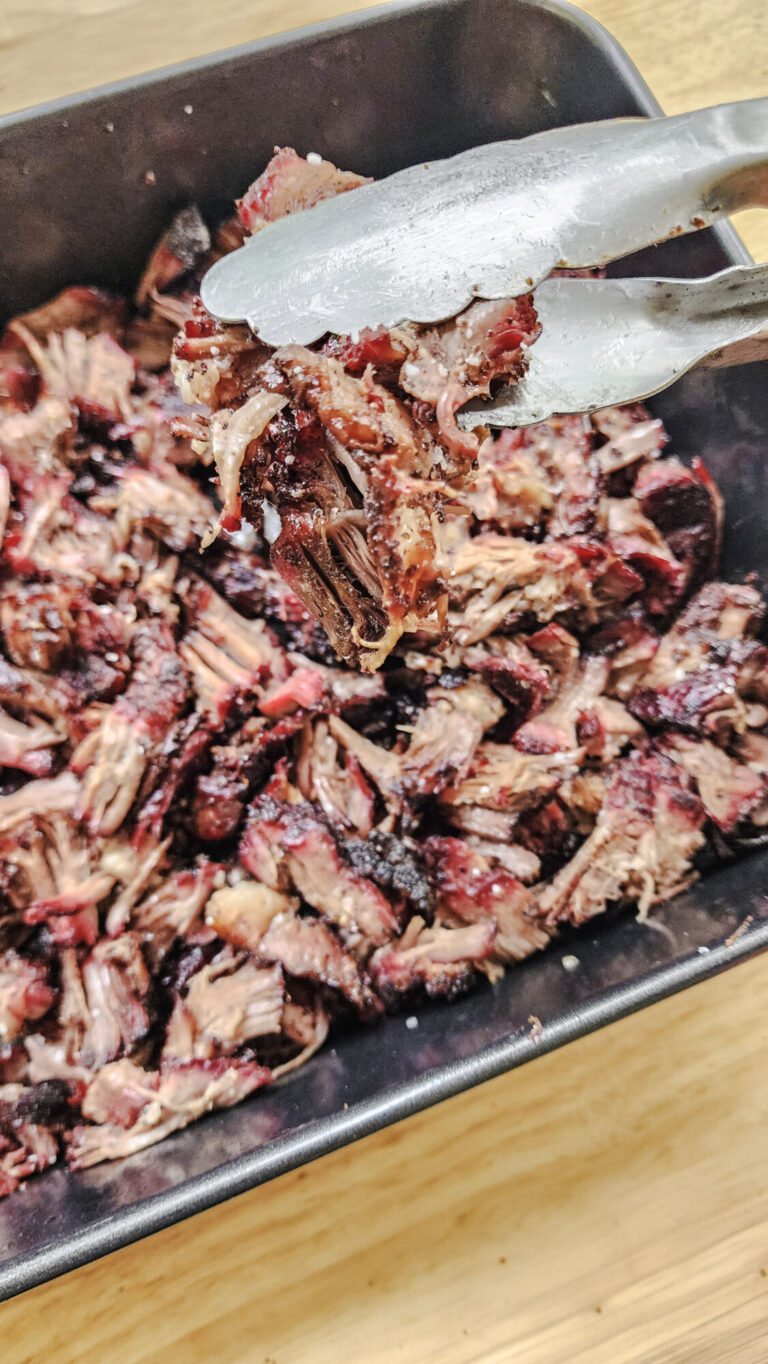
Smoked Pulled Beef Ingredients
Simplicity is the name of the game when it comes to the ingredients for this recipe: boneless beef chuck roast, a touch of oil (which acts as a binder for the rub), a simple salt and pepper rub, and some smoke!
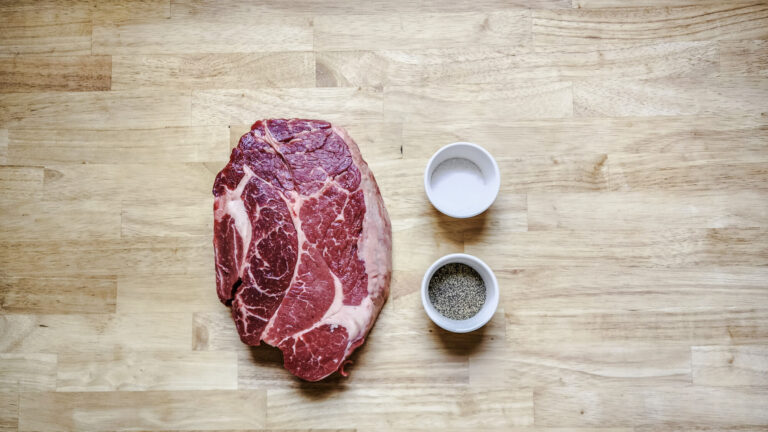
The Beef
When it comes to finding and selecting a beef chuck roast for this recipe, you're looking for a few things, which I've outlined below:
- The roast should be at least 1-inch thick. Ideally, look for one that's 1 ½ to 2-inches thick (or more).
- The cut of beef you choose should have a lot of marbling and intramuscular fat running through it. The fat and connective tissues are what break down during the slow-cooking process. This provides us with the silky-soft and tender texture we're after.
- Look for meat that is dark red or bright pink. When beef gets oxidized, it turns a brown or gray color. This is a definite indicator that the meat has been sitting for a while and is no longer fresh.
- Your butcher or grocery store may sell bone-in chuck roasts. This is the same cut of meat, but obviously with the bone still in it. The added mass of the bone may cause it to take you a little longer to reach your final temperature. The trade-off here is that the meat near the bone will have a little more flavor.
The Dry Rub
The dry rub for this recipe is a very simple, Texas-style salt and pepper rub. This is an ultra-easy and classic dry rub that can be used for almost any barbecue dish. There's a little bit of math involved here (Scary, I know! Math isn't my favorite either!), but the results are totally worth it.
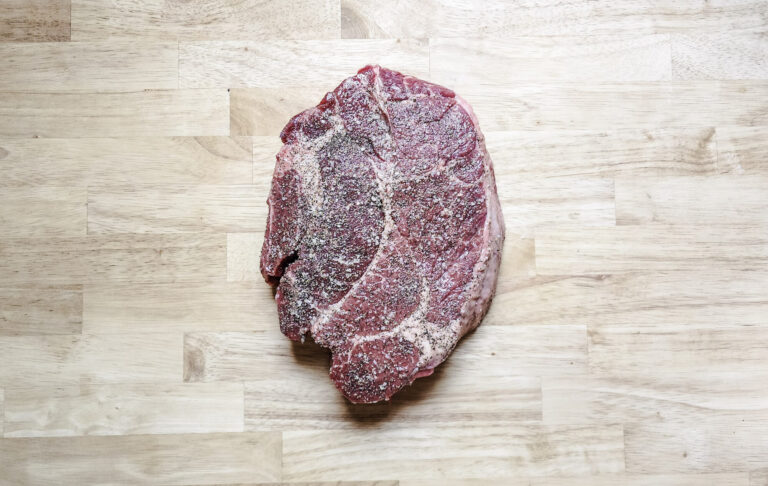
Start with ½ teaspoon of Kosher salt per pound of meat. Then, take that amount and double it for the black pepper. This is also one of the only occasions that I encourage you to buy store-bought, pre-ground black pepper. Since we'll be cooking this for several hours, it's not super important to crack your own. Plus, we're talking about using a tablespoon or more of black pepper, and that would be a serious forearm workout if you were to grind it yourself!
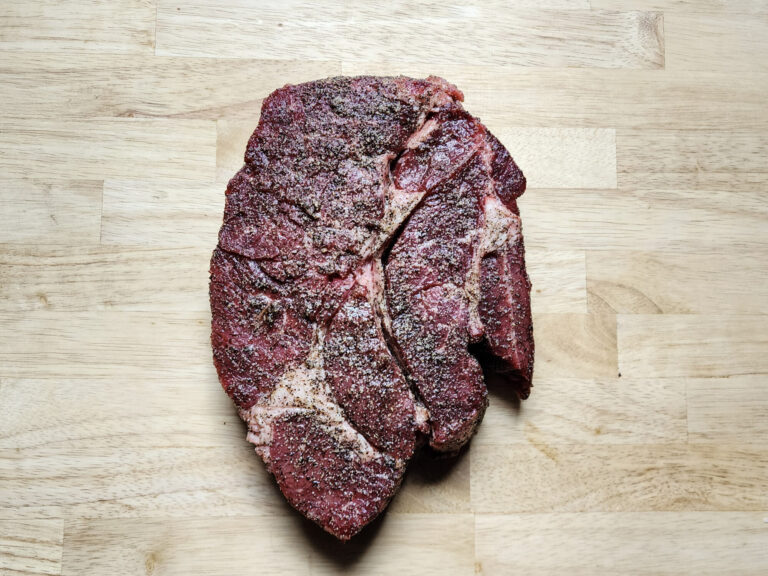
The day before cooking, rub your meat with several tablespoons of neutral oil to act as a binder for the rub. You should rub fairly vigorously to create a sort of tacky, oily paste on the outside of the meat. Next, dust the rub over every inch of the surface of your roast, then massage it into all of the nooks and crannies. After it's rubbed, rest the meat on a wire rack over a baking sheet in the fridge overnight. You can rub the roast and then immediately transfer it to the smoker if you'd like. The overnight rest in the fridge helps the salt totally penetrate into the meat.
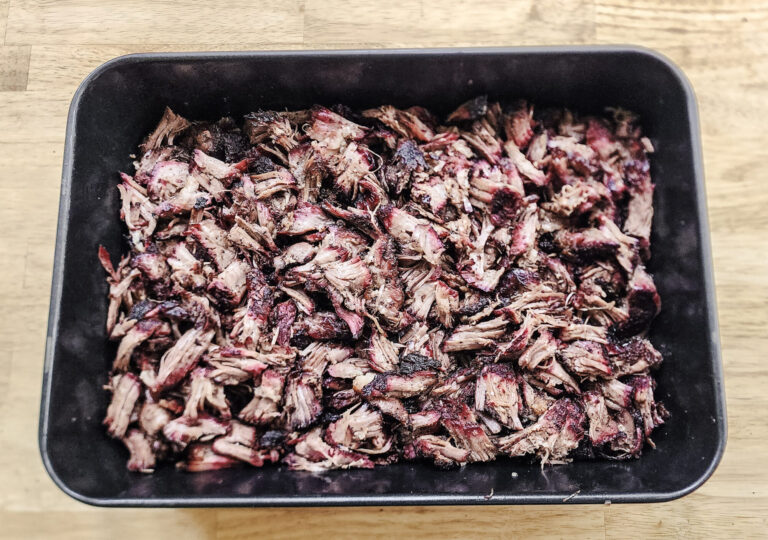
Pulled Beef Smoking Process
Begin by bringing your smoker up to around 225°F. This is the target temperature for the entire duration of the cook. The cooking time for barbecue varies entirely depending on multiple elements, like the size of your roast, how hot your smoker is, the outside conditions, etc., so all cooking times provided are a general guideline. I typically aim for 1 ½ hours per pound of meat as a general rule of thumb, but this could vary depending on your situation.
Temperature is a much better indication of when barbecue is cooked properly. To achieve velvety smooth and delicious barbecue, you're looking to hit an internal temperature of 200 to 205°F at the thickest part. This ensures that the connective tissues and fat have completely broken down, and you have perfectly soft and tender results. I highly recommend the Thermapen ONE by ThermoWorks® - go check itout here! It's the only internal thermometer that I recommend to use.
Once you get your smoker up to temperature, add your wood chunks or chips of choice (I prefer a combination of mesquite and apple). Put the roast on the smoker and cook it undisturbed until you reach an internal temperature of around 160-165 °F. This will take several hours. At this point, we've hit what is called the "stall" in barbecue lingo. This is where the muscle fibers begin to contract and squeeze out excess liquid. The liquid has a cooling effect on the meat as you're trying to cook it and typically prevents the temperature from rising until most of that liquid has evaporated. This takes time and energy to cook that liquid off.
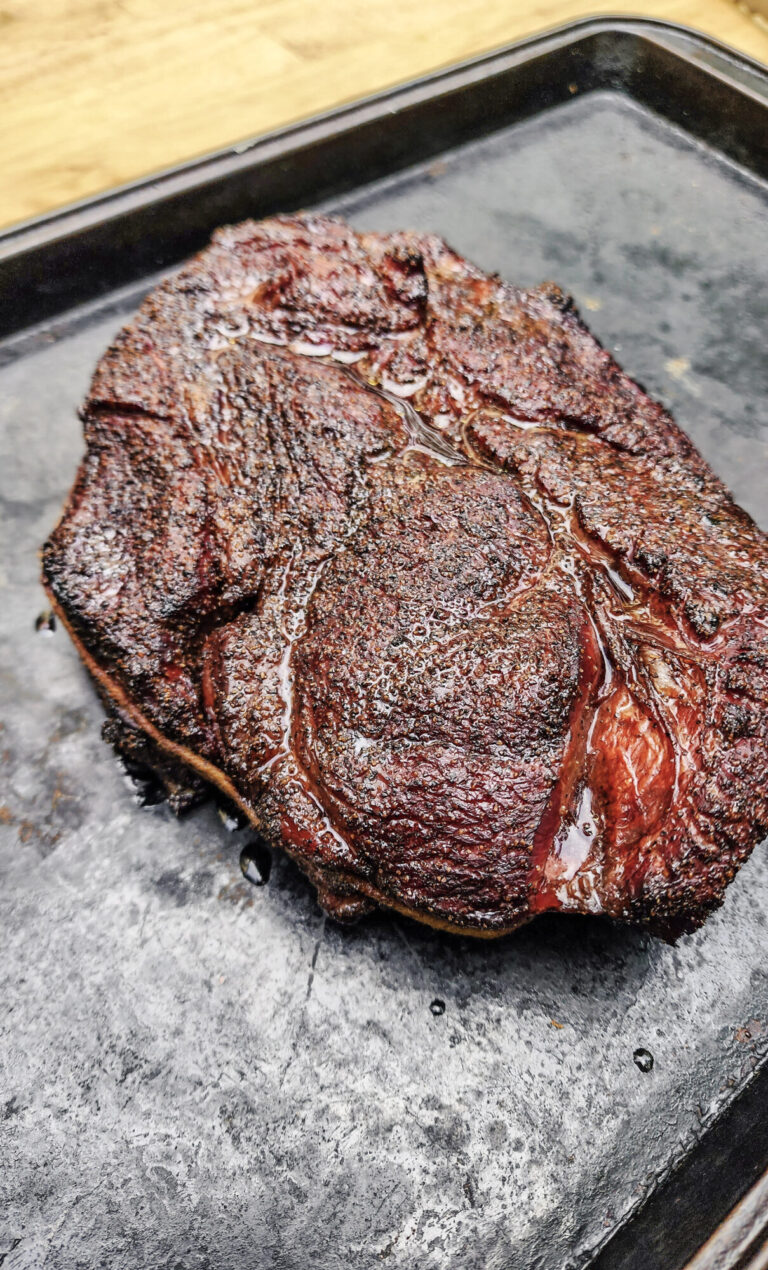
The Foil Boat Method
One way around this is to use the "Texas crutch" method. This means wrapping your meat in butcher paper, aluminum foil, or parchment paper for the remainder of the cook. This prevents the liquid from cooling the meat, which will cook everything faster. While this aids in getting you up to your desired finish temperature quicker, it will also soften the bark (the outer brownish-black "crust" you've worked so hard to develop).
Enter the "Foil Boat" Method. This cooks your meat quicker AND preserves most of the bark. I picked up this technique from watching Bradley Robinson of Chuds BBQ on YouTube (go check out his channel; he's got some awesome-looking food and is extremely knowledgeable about all things barbecue, sausage making, and cooking in general). Essentially, you wrap the bottom half of your roast in butcher paper, foil, etc. to prevent the cooling effect, but you leave the top exposed to keep the top bark nice and dry. Win-win!
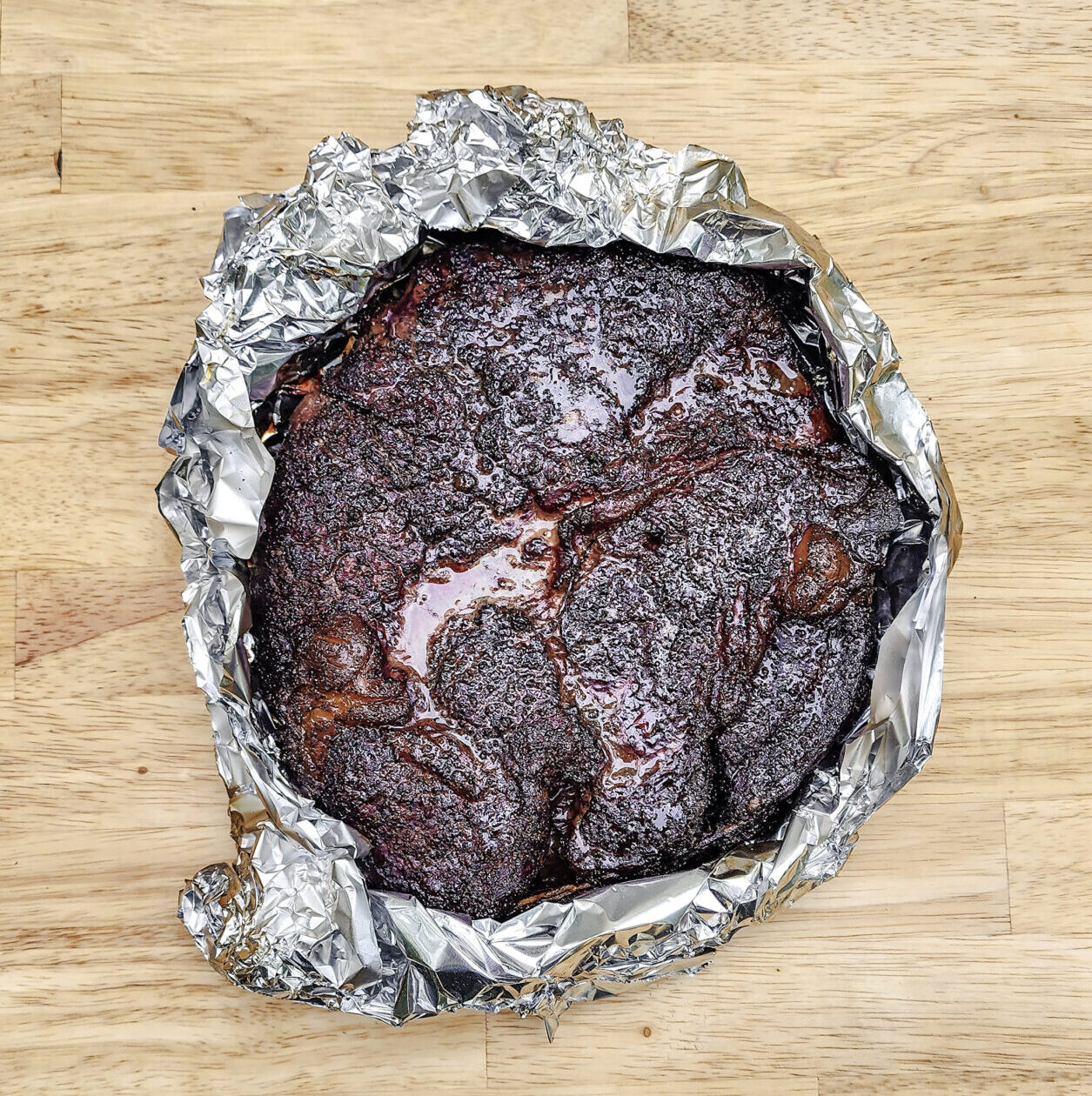
Resting Methods
Once you've hit your target internal temperature of 200 to 205°F, it's time to take the roast off the smoker and let it rest for at least 20 to 30 minutes, up to several hours. I like to place my meat in a container or pan and wrap everything with foil to maintain the internal temperature. One other thing you can do is add beef tallow or butter at this point. This adds an extra boost of flavor to your finished product but is entirely optional.
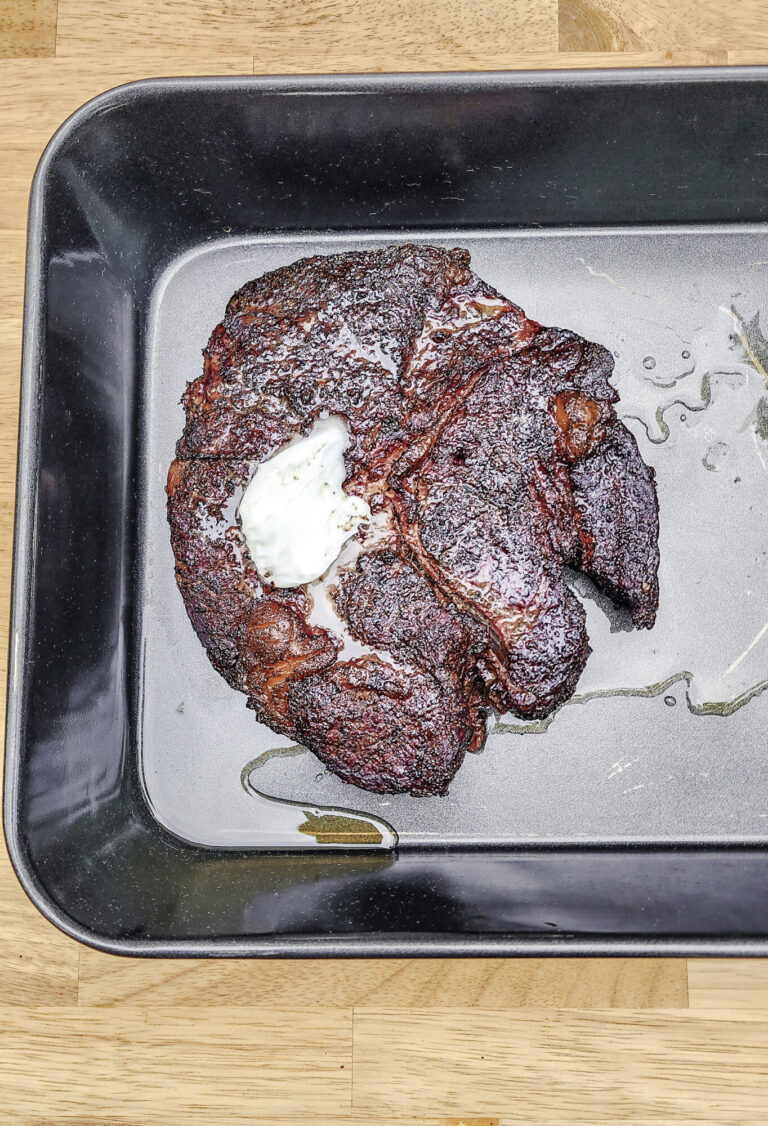
One more trick is to wrap your covered container in a towel and put the whole thing in a cooler. This will allow your roast to rest, but the temperature will stay the same for several hours. This is the perfect method to use if you plan on making this dish ahead of time!
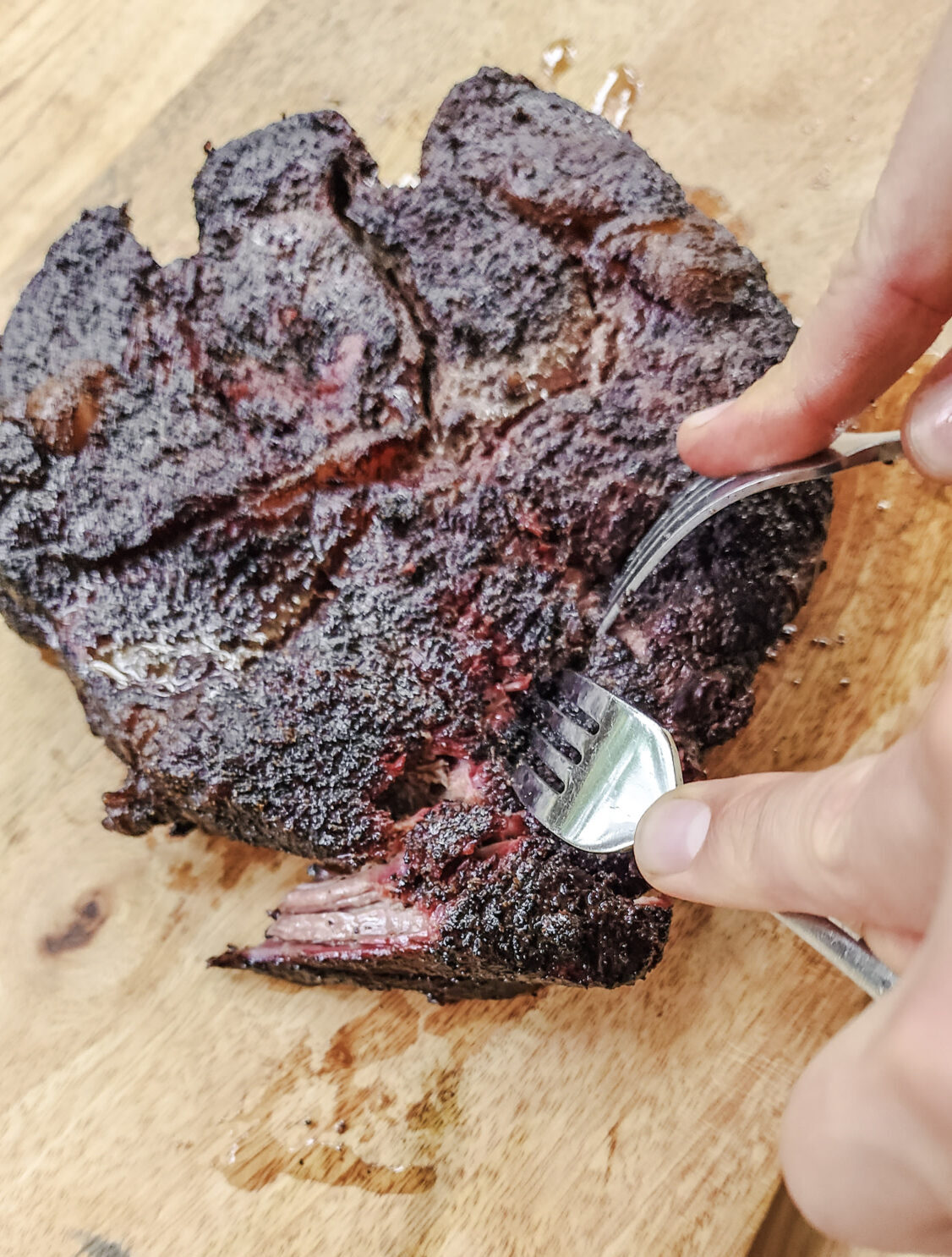
After resting, the meat should be cool enough to handle but still warm. Transfer to a cutting board and begin to shred with two forks or your hands.
Serving Suggestions
Serve this Smoked Pulled Beef as-is or with a touch of your favorite barbecue sauce (I prefer my recipe for Homemade Barbecue Sauce!). Traditional barbecue sides, such as baked beans, my recipe for Honey Jalapeno Cornbread, Crunchy Pepper Slaw, and Carolina Brussels Sprouts, are perfect to serve next to this dish. Go check out the recipes at the links below and let me know what you think!
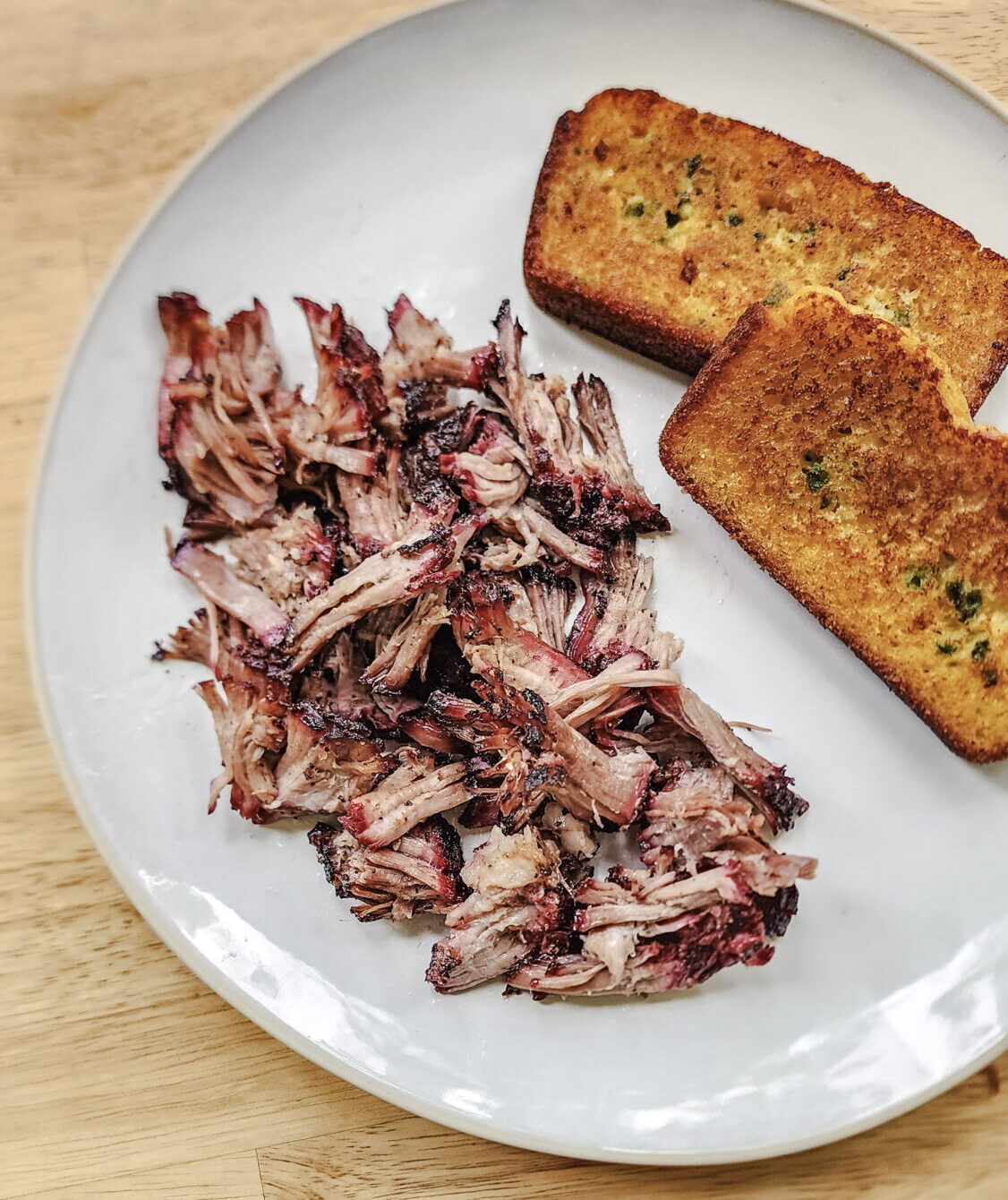
I also like to make barbecue sandwiches with the leftovers that this typically yields. Take some slices of squishy white bread, add some mayo and some easy refrigerator dill pickle slices, and then add a heaping pile of the pulled beef. Slather it with your favorite barbecue sauce and dig in! - Honestly, this should probably have a post of it's own; it's so good.
Did you make this recipe for Smoked Pulled Beef?
Let me know in the comments below how yours turned out, and don't forget to leave a rating!
Recipe
Smoked Pulled Beef (Poor Man's Brisket)
Equipment
- Smoker And appropriate fuel source (Charcoal, Pellets, Wood, etc.)
- Wire Rack
- Rimmed Sheet Pan
- Aluminum Foil
- Instant Read Digital Thermometer Optional but highly recommended
Ingredients
Beef
- 1 4 - 6 lb. Chuck Roast Bone In or Boneless
- 2 - 3 Tablespoons Beef Tallow (Optional)
- Wood Chunks, Chips, or Logs of Your Choice for Smoking (Apple, Mesquite, Hickory, Cherry, etc.)
- Kosher Salt To Taste
- Black Pepper To Taste
- Your Favorite Barbecue Sauce For Serving
Salt & Pepper Rub
- 3-4 Tablespoons Neutral Cooking Oil
- ½ Teaspoon Kosher Salt Per Pound of Meat Example: 2 teaspoon for 4 lb. Chuck Roast
- Double the Salt amount for Pre-Ground Black Pepper Example: 2 teaspoon of kosher salt = 4 teaspoon Black Pepper for a 4 lb. Chuck Roast
Instructions
- Note - The times and amounts given in this recipe assume an approximate 4 - 6 lb. chuck roast. This recipe as written should be used as a loose guideline. It is up to you to apply it to your exact cooking/barbecue scenario. The exact cooking time will vary depending on the size of your cut of meat, your smoker/fuel source, the weather conditions, etc. An instant read thermometer will be the best way to ensure good results.
Dry Rub
- The day before smoking, vigorously rub your chuck roast with several tablespoons of any neutral cooking oil. (A tacky, oily paste should form - this acts as a binder for the dry rub).
- Combine the measured kosher salt and black pepper in a small container, and mix. Apply rub on all sides of the beef until evenly coated. Place the chuck roast on a wire rack over a rimmed sheet pan and rest overnight, uncovered in the refrigerator. (The overnight rest is recommended but optional. You can apply your rub and place the beef directly onto the smoker if desired. The overnight rest with the rub allows the salt to penetrate more completely, and it also dries out the surface of the meat. The drier the surface, the better and quicker a bark will form.)
Smoking Instructions
- Preheat your smoker to 225℉. If you opted for the overnight rest, remove the chuck roast from the fridge and allow to warm up slightly while your smoker is coming up to temperature.
- Once up to temperature, add your wood chips/chunks (if using), and place your beef on the smoker. Cook for several hours (approximately 3 to 4 hours) until the internal temperature reaches 165℉ on an instant read thermometer. Add charcoal/pellets/wood chips as necessary to maintain smoker temperature.
- Once the meat reads 165℉ internally, temporarily remove the roast from the smoker, and place it on several sheets of aluminum foil. Crumple the edges up around your chuck roast, leaving the top side exposed. Return the roast back to the smoker, and continue to smoke for several hours until the internal temperature reaches 200 - 205℉. This will take approximately an additional 3 to 4-hours.
- Transfer your chuck roast from the smoker to a rimmed sheet pan or baking dish. Discard the foil boat (be sure to pour any liquid from the foil onto the beef!) Optionally, add 2 - 3 tablespoons of beef tallow over the beef. Cover your dish with tinfoil and rest for at least 30-minutes.Optionally: Wrap the covered resting container in a towel and place in a cooler for several hours until ready to serve.
- Transfer beef to a cutting board or serving vessel, and pull into bite-sized chunks. Sprinkle more salt and pepper over the top as needed. Serve as-is, or drizzle with your favorite barbecue sauce.


The best part of brisket and pulled pork. Perfectly smokey and tender