
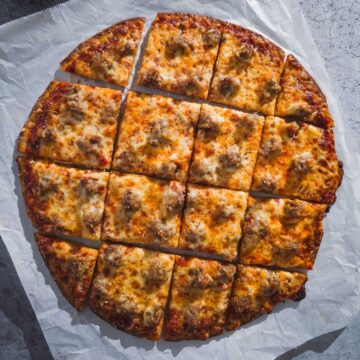
This Chicago Thin Crust Pizza is thin, crisp, and packed with flavor. Also known as tavern-style pizza, it's rolled thin, topped nearly to the edge, baked until deeply crisp, and cut into those classic squares. The dough is easy to make, with a sturdy, crunchy crust, bold sauce, plenty of cheese, and those crispy little corner pieces everyone reaches for first.

I grew up just outside of Chicago, and developing this recipe was my attempt to recreate the crispy, crackery, thin crust style pizza I remember from childhood. While we would occasionally order stuffed pizza from Giordano's, in my family, thin crust was what we ate most often.
This recipe is largely inspired by John Carruthers of Crust Fund Pizza, whose approach helped guide the balance of flavor, texture, and crispness I was looking for (get his full thin crust pizza recipe here). I wanted a dough that was easy to work with, full of flavor, and baked up consistently crisp from edge to edge in a home oven. After working through the dough, fermentation, thickness, toppings, and baking method, this is the version I come back to whenever I want that classic Chicago tavern-style pizza at home.
If you're building your next pizza night completely from scratch, you'll also want my homemade pizza sauce to go with it. And for a completely different style of crust, try my Cold Fermented Pizza Dough-it's my go-to when I want a more traditional, chewy homemade pizza crust.
Quick Look: Chicago Thin Crust Pizza
- Active Prep Time: About 30 minutes
- Room-Temperature Proof: 1 hour
- Cold Ferment: Overnight (12 hours minimum), or up to 5 days
- Before Baking: 3 hours at room temperature
- Bake Time: 9-10 minutes per pizza
- Total Time: About 17 hours and 20 min minimum
- Crust: Thin, crisp, sturdy, and deeply browned
- Flavor: Savory, cheesy, and well-seasoned
- Difficulty: Easy-to-intermediate
Why You'll Love This Recipe
This Chicago tavern-style pizza is simple, crispy, and packed with flavor without making pizza night complicated.
- Crispy from edge to edge. Thin, sturdy, and baked until deeply crisp.
- Flavorful dough. Easy to work with, with plenty of flavor from the cold ferment.
- Made for a home oven. No dedicated pizza oven required.
- Easy to customize. Keep it classic with sausage and cheese or switch up the toppings-just keep them light enough to preserve that crisp crust.
Jump to:
- Quick Look: Chicago Thin Crust Pizza
- Why You'll Love This Recipe
- Chicago Thin Crust Pizza Ingredients
- Substitutions
- Classic Topping Ideas
- Recommended Pizza Equipment
- How to Make Chicago Thin Crust Pizza
- Top Tips for the Best Chicago-Style Thin Crust Pizza
- Chicago Thin Crust Pizza FAQ
- More Homemade Pizza Night Favorites
- Recipe
- Comments
Chicago Thin Crust Pizza Ingredients
You only need a handful of ingredients to make a classic cheese Chicago thin crust pizza. I usually keep the toppings traditional with Italian sausage or pepperoni, but you can easily make it your own by adding what you like.
Chicago Thin Crust Dough

- Bread flour: Gives the thin crust enough structure to stay crisp and sturdy while still having a little chew.
- Cornmeal: A small amount in the dough adds texture and contributes to that classic tavern-style character.
- Active dry yeast: Provides the rise while the long cold ferment does most of the work developing flavor.
Cheese and Sauce

- Low-moisture whole-milk mozzarella: The main melting cheese. It gives you that classic stretchy, browned pizza-cheese finish without adding the excess moisture of fresh mozzarella.
- Parmesan: Adds salty, nutty flavor over the mozzarella, building more depth into every bite.
- Romano: A light finishing dusting adds the sharp, salty bite that's essential to the flavor of this Chicago-style pizza.
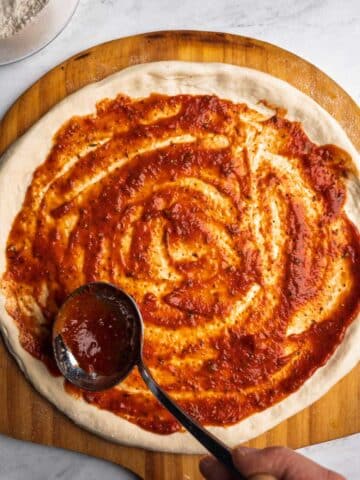
- Go-To Homemade Pizza Sauce: My go-to sauce for pizza night. It's bold and well-seasoned without being overly wet, so you get plenty of flavor without sacrificing that crisp tavern-style crust. (Plus you don't have to cook it!)
Refer to the recipe card below for the complete list of ingredients and quantities.
Substitutions
A few simple swaps work well in this recipe if you don't have the exact ingredients on hand. Just keep in mind that small changes can affect the final texture, especially with a thin, crispy crust like this one.
- Bread flour: All-purpose flour can be used instead. The crust may be slightly less chewy, but it will still bake up thin and crisp.
- Active dry yeast: Instant yeast can be used instead in the same amount by weight. It may work a little faster, so keep an eye on the dough rather than relying only on the clock.
- Low-moisture whole-milk mozzarella: Part-skim low-moisture mozzarella works just as well if whole-milk mozzarella isn't available. Avoid fresh mozzarella here, since the extra moisture can make a thin crust pizza soggy.
Classic Topping Ideas
Chicago tavern-style pizza can handle plenty of flavor, but because the crust is still thin, the toppings should stay fairly light. Too much meat, cheese, or wet toppings can weigh the crust down and keep it from getting as crisp as it should.
- Italian sausage: A classic choice and probably the topping I'd reach for first. Scatter small pieces evenly under the mozzarella so you get sausage in every bite without overloading the pizza.
- Pepperoni: Another easy classic. Arrange a single, even layer over the cheese so the thin crust doesn't get weighed down.
- Giardiniera: Optional, but a great Chicago touch if you like some heat and acidity. Drain it well before adding so you're not introducing extra moisture to the crust. Look for giardiniera packed in oil rather than vinegar if possible.
- Veggies: Add any fresh vegetables that you want, just be sure to go sparingly, and slice them thin so they actually cook through.
The goal is a pizza that feels hearty and loaded with flavor without becoming heavy. With tavern-style pizza, a little restraint with the toppings helps keep that thin crust crisp all the way through.

Recommended Pizza Equipment
You don't need a dedicated pizza oven to make great Chicago-style thin crust, but a few pieces of equipment make the process much easier and help you get that crisp, tavern-style finish.
- Digital kitchen scale: Gives you more consistent measurements, especially for small amounts of yeast and equal dough portions.
- Stand mixer: Makes quick work of mixing and kneading the dough until smooth.
- Pizza steel: One of the keys to a crisp bottom crust in a home oven. A thoroughly preheated steel gives the dough an immediate blast of heat. A pizza stone is the second best option.
- Oven that reaches 550°F: Higher heat gives you better browning and crispness. If your oven tops out at 500°F, this recipe will still work-see the instructions below for adjustments.
- Rolling pin: Helps roll the dough evenly thin from edge to edge.
- Dough docker: Prevents large bubbles and keeps the crust flat and even. No docker? A fork works too.
- Pizza peel: Makes transferring the pizza to and from the oven much easier. If you only buy one, I recommend a wooden peel for launching.
- Cooling racks: Let steam escape after baking so the bottom crust stays crisp instead of softening.
How to Make Chicago Thin Crust Pizza
Follow the steps below to make the perfect crispy, Chicago-style thin crust pizza.

Step 1 - Bloom the Yeast: Combine the warm water, sugar, and yeast. Let sit for 5-10 minutes until bloomed. Meanwhile, combine the flour, salt, and cornmeal in the bowl of a stand mixer.

Step 2 - Mix the Dough & Rest: Add the yeast mixture, ice water, and oil to the dry ingredients. Mix for 2-3 minutes until combined, then let the dough rest for 30 minutes.

Step 3 - Knead the Dough: Knead on low speed for 3-5 minutes, or until the dough is smooth and evenly developed.

Step 4 - Proof the Dough: Shape the dough into a ball, cover and let it bulk proof at room temperature for 1 hour. Divide the dough into 2 equal portions, about 304 g each, shape into balls, transfer each portion to an oiled container, and refrigerate overnight (at least 12 hours), or for up to 5 days. A full 24 hours will develop even more flavor.

Step 5 - Prepare for Baking: Remove the dough from the refrigerator 3 hours before baking to relax. About 1 hour before baking, preheat the pizza steel at 550°F (or 500°F if that's as high as yours will go).

Step 6 - Roll and Dock: Transfer the dough to a floured surface and roll it into a 14-inch circle. Transfer to a pizza peel dusted with cornmeal and dock the entire surface with a dough docker or fork.

Step 7 - Top the Pizza: Add 6 ounces of pizza sauce, followed by 1 ounce Parmesan, sausage (if using), 6 ounces mozzarella, and the remaining 1 ounce Parmesan. Finish with a dusting of Romano and a light sprinkle of kosher salt.

Step 8 - Bake and Serve: Reduce the oven temperature to 500°F (or leave it at 500°F if that's your oven's maximum) and bake for 9-10 minutes. Transfer the pizza to a cooling rack for 3-5 minutes, then cut into squares and serve.

Top Tips for the Best Chicago-Style Thin Crust Pizza
A few small details make a big difference when you're trying to get that thin, crisp tavern-style crust at home. These are the things I pay the most attention to every time I make it.
- Dust the pizza peel lightly with cornmeal. Use just enough to help the pizza slide. Too much can interfere with contact with the steel and may scorch, leaving the crust gritty or bitter.
- Get the pizza steel fully hot. Give the oven and steel plenty of time to preheat so the crust starts browning immediately.
- Reheat the steel between pizzas. After each pie comes out, run the broiler for a few minutes to bring the steel back up to temperature before launching the next one.
- Top all the way to the edge. Tavern-style pizza has very little outer crust, so take the sauce, cheese, and toppings nearly edge to edge.
- Keep the toppings light. The crust is sturdy, but overloading it can trap moisture and keep it from getting properly crisp.
- Roll thin and dock well. Roll the dough evenly from edge to edge, then dock the entire surface to prevent large bubbles and help the crust bake flat and crisp.
Chicago Thin Crust Pizza FAQ
Chicago tavern-style pizza is a thin, crispy style of pizza from Chicago topped nearly to the edge and traditionally cut into small squares, often called a party cut.
No. If you're using small pieces of raw Italian sausage as directed in this recipe, they can cook directly on the pizza. Keep the pieces small and evenly distributed so they cook through during the bake; pork sausage should reach 160°F.
You can, but I recommend at least an overnight cold ferment for better flavor and texture. A full 24 hours is even better, and the dough can be refrigerated for up to 5 days if you want to make it ahead.
The square cut-often called a party cut or tavern cut-has long been associated with Chicago's neighborhood tavern pizza tradition. The exact origin is a little murky, but cutting a round pizza into small squares made it easy to share around a table and snack on alongside drinks. It also happens to create the best mix of crispy edge pieces, corner pieces, and cheesy center squares.
More Homemade Pizza Night Favorites
Keep pizza night going with a few more from-scratch favorites. These recipes are some of my go-to picks for building a full homemade pizza spread or switching up the style next time.

Did you make this Chicago Thin Crust Pizza?
Let me know how yours turned out in the comments below, and don't forget to leave a rating!
Recipe
Chicago Thin Crust Pizza (Crispy Tavern-style)
Equipment
- Digital kitchen scale
- Pizza Steel Or Pizza Stone
- Rolling Pin
- Dough Docker Or Fork
- Cooling Racks
Ingredients
Chicago Thin Crust Dough
- 363 g Bread Flour Plus more for dusting work surfaces.
- 13 g Cornmeal Plus more for dusting the pizza peel.
- 4 g Granulated sugar
- 2 g Active Dry Yeast
- 11 g Kosher Salt Diamond Crystal Brand preferred - plus more to taste.
- 50 g Warm Water 100-115℉
- 135 g Ice Water (Measure after chilling)
- 30 g Oil
For the Pizzas
- 12 oz Go-To Homemade Pizza Sauce
- 4 oz Parmesan cheese
- ½ lb. Italian sausage Optional, raw and pinched into small pieces.
- 12 oz Low-Moisture Whole-Milk Mozzarella
- Romano Cheese To taste.
Instructions
- Make the dough: Combine the warm water, sugar, and active dry yeast. Let sit for 5-10 minutes until bloomed and foamy. Meanwhile, combine the bread flour, salt, and cornmeal in the bowl of a stand mixer.
- Add the yeast mixture, ice water, and oil to the dry ingredients. Mix on low speed for 2-3 minutes until combined, then cover and let the dough rest for 30 minutes.
- Knead on low speed for 3-5 minutes, or until the dough is smooth and evenly developed.
- Shape the dough into a ball, cover, and let it bulk proof at room temperature for 1 hour. Divide into 2 equal portions, about 304 g each, and shape into balls. Transfer to lightly oiled containers, cover, and refrigerate overnight at minimum or for up to 5 days.
- Shape and Bake: Remove the dough from the refrigerator 3 hours before baking so it can relax and is easier to roll out. About 1 hour before baking, place a pizza steel in the oven and preheat to 550°F, or 500°F if that is your oven's maximum.
- Working with one dough ball at a time, transfer the dough to a lightly floured surface and roll into a 14-inch circle. Transfer to a pizza peel lightly dusted with cornmeal and dock the entire surface with a dough docker or fork.
- Spread 6 ounces pizza sauce nearly to the edge. Sprinkle with 1 ounce Parmesan, followed by Italian sausage if using. Top with 6 ounces mozzarella and the remaining 1 ounce Parmesan. Finish with a light dusting of Romano and a small sprinkle of kosher salt.
- Reduce the oven temperature to 500°F, or leave it at 500°F if that is your oven's maximum, and bake for 9-10 minutes until the cheese is melty, bubbling, and the crust has sufficiently browned. Transfer the pizza to a cooling rack and let rest for 3-5 minutes, then cut into classic tavern-style squares. Before baking the second pizza, run the broiler for a few minutes to bring the steel back up to temperature.


Comments
No Comments